Qingke Jiebao Pet Products
Cats are creatures of habit — a sudden litter swap can lead to box avoidance and accidents. Here’s how to switch cat litter smoothly, whether you’re moving to tofu or crystal.
The 2-Week Blend Method
- Days 1–3: 75% old litter + 25% new.
- Days 4–7: 50/50 mix.
- Days 8–11: 25% old + 75% new.
- Days 12+: 100% new litter.
Tips for Success
- Go unscented during the switch — fragrance is the top cause of rejection.
- Keep the box in the same spot; don’t move it mid-transition.
- For crystal litter, expect a texture adjustment — slower blending helps.
- Reward use with praise; never punish accidents.
Watch for Red Flags
If your cat stops using the box entirely, revert a step and consult a vet — sudden avoidance can signal stress or a UTI, not just litter preference.
Q: How long does a litter transition take?
A: Usually 1–2 weeks. Sensitive cats may need longer; go at their pace.
Q: Should I switch all boxes at once in a multi-cat home?
A: Transition one box first, then the rest once cats accept it.
Ready to switch? Grab a small bag of tofu or crystal litter and use this plan — most cats adapt within days.
Traditional clay litter comes from strip mining and sits in landfills for centuries. An eco-friendly cat litter cuts that footprint — and plant-based options like tofu cat litter are now the fastest-growing segment worldwide.
Sustainable Options
- Tofu / soybean fiber — biodegradable, flushable, dust-free. The green all-rounder.
- Wood & paper pellets — made from byproducts, compostable, soft on paws.
- Corn / wheat — renewable, clumping, lightweight.
Why It’s Better for Your Cat Too
No silica dust, no synthetic fragrance, no clay mining residues. Plant-based litters are typically hypoallergenic and non-toxic if ingested — a safer daily environment.
How to Switch Sustainably
- Pick a certified biodegradable formula (look for compostability benchmarks).
- Transition gradually using a blend method over 2 weeks.
- Compost or flush per local rules — never send clay to landfill if you can avoid it.
Q: Is biodegradable litter as effective as clay?
A: Modern plant-based litters clump and control odor on par with clay — without the dust and mining.
Go green without the guesswork: Start with tofu cat litter — the most adopted sustainable option of 2026.
Can’t decide between plant-based and silica? This tofu vs crystal cat litter breakdown settles it by the metrics that matter.
| Factor | Tofu (plant-based) | Crystal (silica gel) |
| Clumping | Yes, soft & fast | No (absorbs) |
| Odor control | Good (natural) | Excellent (weeks) |
| Dust | Very low | Very low |
| Flushable | Yes | No |
| Biodegradable | Yes | No (synthetic) |
| Maintenance | Scoop daily, change weekly | Stir daily, change monthly |
| Cat acceptance | High | Some dislike texture |
| Cost | Mid–high | Mid (lasts longer) |
Choose Tofu If…
You want flushable convenience, eco credentials, and a soft, natural feel your cat will likely accept. Best for apartments and green-minded owners.
Q: Can I mix tofu and crystal?
A: Not recommended — they handle moisture differently and can muddy scooping. Pick one per box.
Still undecided? Read our tofu deep-dive or crystal vs clumping guide for the full picture.
“Can it flush?” is the single most-asked question about cat litter in the apartment boom — and the answer is reshaping the market. Flushable cat litter, led by tofu/plant-based formulas, lets you skip the trash entirely.
Can You Flush Tofu Cat Litter?
Yes — in moderation. Tofu litter is made from food-grade plant fiber that dissolves in water. Scoop the solid clumps and flush small amounts; don’t dump the whole tray at once, and always follow local plumbing rules. Clay and crystal litters should never go down the toilet (they don’t break down and can clog pipes).
Why Flushable Wins
- No smelly trash bags sitting in a hot apartment.
- No hauling heavy soiled bags to distant bins.
- Biodegradable disposal that’s kinder to landfills.
Do It Right
- Scoop clumps daily into the toilet (small batches).
- Flush only the clumps — never the full box.
- Store the bag sealed in a cool, dry place to avoid humidity softening.
Q: Will flushable litter clog my septic system?
A: Tofu clumps are generally septic-safe in small amounts, but check your local guidelines and avoid overloading.
Go flushable: Start with unscented tofu cat litter and our easy transition plan.
More cats = more waste, more odor, and more box traffic. The best cat litter for multi-cat homes has to do three things at once: clump hard, neutralize ammonia, and stay low-dust across heavy use.
What Multi-Cat Homes Need
- One box per cat, plus one extra — placement matters as much as the litter.
- Strong, fast clumping so urine is removed before it spreads.
- Activated charcoal or enzyme odor control to handle higher ammonia load.
- Low dust — with several cats digging, dust multiplies fast.
Top Recommendations
- Best clumping: Premium bentonite or a tofu+bentonite mixed litter — hard clumps, low dust, widely accepted.
- Best low-maintenance: Crystal cat litter across multiple boxes — fewer full changes, consistent odor control.
- Best eco + low-dust: Tofu cat litter, scooped 1–2x daily and fully changed weekly.
Q: How often should I scoop a multi-cat box?
A: At least twice daily. Even flushable tofu litter should be fully replaced weekly to prevent bacteria and urinary issues.
Scale up cleanly: See our tofu vs crystal comparison to pick the formula that fits your crew.
Every time your cat digs in a dusty box, a cloud of respirable particles goes airborne — and straight into feline (and human) lungs. Veterinary guidance is clear: dust-free cat litter is one of the simplest ways to lower the risk of cat asthma and chronic bronchitis.
Why Dust Matters More Than You Think
- Fine clay silica dust irritates airways and can trigger or worsen feline asthma.
- It settles on surfaces and gets inhaled by everyone in the home, especially allergy sufferers.
- Low-grade clay is the usual culprit; “dust-free” labels vary, so check reviews for pour-tests.
Best Low-Dust Options
- Tofu / plant-based litter — naturally ~99% dust-free and gentle on paws.
- Crystal / silica gel litter — virtually no airborne particles.
- Paper or wood pellets — low-dust, soft on recovering or senior cats.
Go Unscented Too
Heavy fragrance can overwhelm a cat’s ultra-sensitive nose and cause box avoidance. Pair a dust-free formula with an unscented one for the healthiest setup.
Q: My cat coughs after using the box — could it be the litter?
A: Possibly. If coughing fits started after a litter change, switch to a dust-free, unscented formula and consult your vet.
Protect those lungs: Explore tofu litter or crystal litter — both are naturally low-dust.
In a studio or one-bedroom, the litter box is never far from where you eat, sleep, or work. That makes three things non-negotiable: low tracking, strong odor control, and easy disposal. Here’s how to pick the best cat litter for apartments.
Flushable = No Dumpster Trips
Hauling a 10kg bag of soiled clay to the shared bin is the worst part of apartment cat ownership. A flushable cat litter (tofu/plant-based) lets you scoop and flush clumps straight down the toilet — the “lazy luxury” urban owners love.
Low Tracking Keeps Floors Clean
Look for larger, heavier granules or rounded pellets that don’t cling to paws. Low tracking cat litter means less sweeping and fewer surprise crunches underfoot.
Odor Control for Tight Quarters
In small spaces, ammonia builds fast. Choose litters with activated charcoal, natural enzymes, or plant fibers that neutralize smell. Crystal cat litter is especially strong here, lasting weeks between changes.
Dust-Free for Shared Air
You’re breathing the same air as the box. A dust-free cat litter protects your lungs and stops a fine film settling on furniture.
Top Picks for Apartments
- Best all-rounder: Unscented tofu cat litter — flushable, low-dust, low-tracking.
- Best for max odor control: Crystal (silica gel) cat litter — weeks of freshness, minimal effort.
- Budget pick: Quality low-dust clumping litter + a covered, well-ventilated box.
Q: Where should I put the litter box in a small apartment?
A: A quiet, ventilated corner — not a humid bathroom. Keep it away from food and high-traffic paths.
Make the switch easy: Pair your apartment-friendly litter with our transition guide so your cat accepts it from day one.
The classic showdown: crystal cat litter (silica gel beads) versus clumping clay. Both are top sellers, but they work completely differently — and the right pick depends on whether you prioritize odor control with minimal effort or easy daily scooping.
How Crystal Litter Works
Silica gel cat litter is made of tiny porous beads that absorb moisture and trap odor inside their structure. There’s no clump — you scoop solids daily and stir the crystals to spread moisture. A single box can last one cat up to a month.
Crystal vs Clumping: The Scorecard
| Factor | Crystal (silica gel) | Clumping (bentonite) |
| Odor control | Excellent, weeks-long | Strong, but daily scooping needed |
| Dust | Very low | Moderate–high |
| Maintenance | Stir daily, full change ~monthly | Scoop clumps daily |
| Tracking | Low (heavier beads) | Moderate (sticks to paws) |
| Cost per use | Higher upfront, lasts longer | Cheaper bag, used faster |
| Cat acceptance | Some dislike the crunch | High (feels like sand) |
Which Should You Choose?
- Pick crystal litter if you want the lowest maintenance, strongest odor control, and minimal dust — great for busy households and allergy sufferers.
- Pick clumping litter if your cat loves sandy texture, you prefer scooping over monthly dumps, or budget is tight.
Many owners run crystal litter in humid months and clumping the rest of the year — or test both to see what their cat accepts.
Q: Is crystal litter safe?
A: Yes, silica gel is non-toxic and very low-dust. The main concern is texture — some cats avoid the crunchy feel, so introduce it gradually.
Q: Does crystal litter clump?
A: No. It absorbs and dehydrates waste instead of forming clumps, which is why full changes are less frequent.
Compare side by side: See our Tofu vs Crystal head-to-head, or jump to multi-cat tips if you have more than one cat.
If you’ve shopped for cat litter recently, you’ve seen the shift: tofu cat litter has gone from niche to mainstream. Made from soybean fiber (and often corn starch or pea husk), this plant-based cat litter is biodegradable, nearly dust-free, and — uniquely — flushable. It’s the single fastest-growing litter category in 2026, and for good reason.
Why Cat Parents Are Switching to Tofu
- Flushable convenience. Scoop the clumps and flush small amounts down the toilet (check local regs). No more hauling heavy bags of soiled clay to the dumpster — perfect for high-rise and apartment living.
- 99% dust-free. Tofu litter produces almost no airborne dust, which is a big deal if your cat has asthma or you have allergies at home.
- Fast, soft clumping. Liquid locks in within seconds, forming clumps that are easy to scoop and don’t crumble like powder.
- Natural odor control. Plant fibers trap ammonia smells without synthetic fragrance — safer for sensitive noses.
- Biodegradable & safe. Made from food-grade byproducts; non-toxic even if a curious cat takes a nibble.
The Honest Trade-offs
Tofu litter isn’t perfect. It costs more per pound than clay, clumps are softer (scoop gently), and in humid climates it can soften or mold if stored poorly — so buy a month at a time and keep it sealed. Some cats dislike the faint plant scent, which is why unscented tofu formulas convert best.
Who Should Buy Tofu Litter?
- Apartment / condo dwellers who want flushable freedom.
- Households with asthma, allergies, or respiratory-sensitive cats.
- Eco-minded owners wanting a biodegradable alternative to mined clay.
- Anyone tired of clay dust clouds when pouring.
Q: Can you flush tofu cat litter?
A: Yes — in reasonable amounts and where local plumbing allows. Flush only the solid clumps, not the whole tray.
Q: Is tofu litter safe if my cat eats it?
A: It’s food-grade and non-toxic, but it isn’t food. Mild interest is normal; persistent eating warrants a vet chat.
Try it risk-free: Start with a small bag of unscented tofu cat litter and follow our stress-free transition guide so your cat adapts in days, not weeks.
Choosing the best cat litter in 2026 is no longer just about “whatever clumps.” Today’s cat parents want a litter that controls odor, stays dust-free, is safe for sensitive respiratory systems, and fits a modern, often small, home. With the global cat litter market now valued at over $22 billion, the shelves are packed — but the real decision comes down to three material families: clumping clay, plant-based (tofu), and crystal (silica gel).
What Actually Matters When Picking a Litter
Before brand names, focus on five factors that determine whether a litter works for your household:
- Clumping vs non-clumping — Clumping litter binds urine into scoopable balls, so you remove waste daily without dumping the whole box. Non-clumping absorbs but forces a full change far more often.
- Dust level — Dust is the #1 complaint among cat owners and a real asthma trigger. Low-dust and dust-free formulas protect both feline and human airways.
- Odor control — Look for litters that neutralize ammonia (activated charcoal, natural enzymes, plant fibers) rather than just masking it with perfume.
- Flushability & tracking — Flushable tofu litter is a game-changer in apartments; low-tracking granules keep your floors clean.
- Safety & acceptance — A litter your cat refuses is useless. Unscented, paw-friendly textures win the widest acceptance.
The Three Contenders at a Glance
| Type | Clumping | Dust | Odor control | Flushable | Best for |
| Bentonite clay | Hard & fast | Moderate–high | Strong | No | Multi-cat, budget |
| Tofu / plant-based | Soft & fast | Very low | Good (natural) | Yes | Apartments, eco-minded |
| Crystal / silica gel | None (absorbs) | Very low | Excellent | No | Low-maintenance homes |
- Best overall value: A fast-clumping, dust-free tofu cat litter — flushable, biodegradable, and gentle on paws. Ideal for most indoor cats.
- Best for low maintenance: Crystal (silica gel) cat litter — absorbs moisture, controls odor for weeks, and barely tracks.
- Best for tight budgets / instinct-seeking cats: Quality clumping bentonite — cheap, widely accepted, but dustier and not flushable.
Q: Is expensive litter worth it?
A: Often yes. Premium plant-based and crystal litters last longer per use, cut vet-adjacent dust risks, and reduce full-box changes — lowering the real cost per week.
Q: Unscented or scented?
A: Unscented. A cat’s sense of smell is ~14x sharper than yours; heavy fragrance can cause box avoidance.
Ready to go deeper? Read our focused guides on why tofu litter is taking over, crystal vs clumping, and the best litter for apartments.
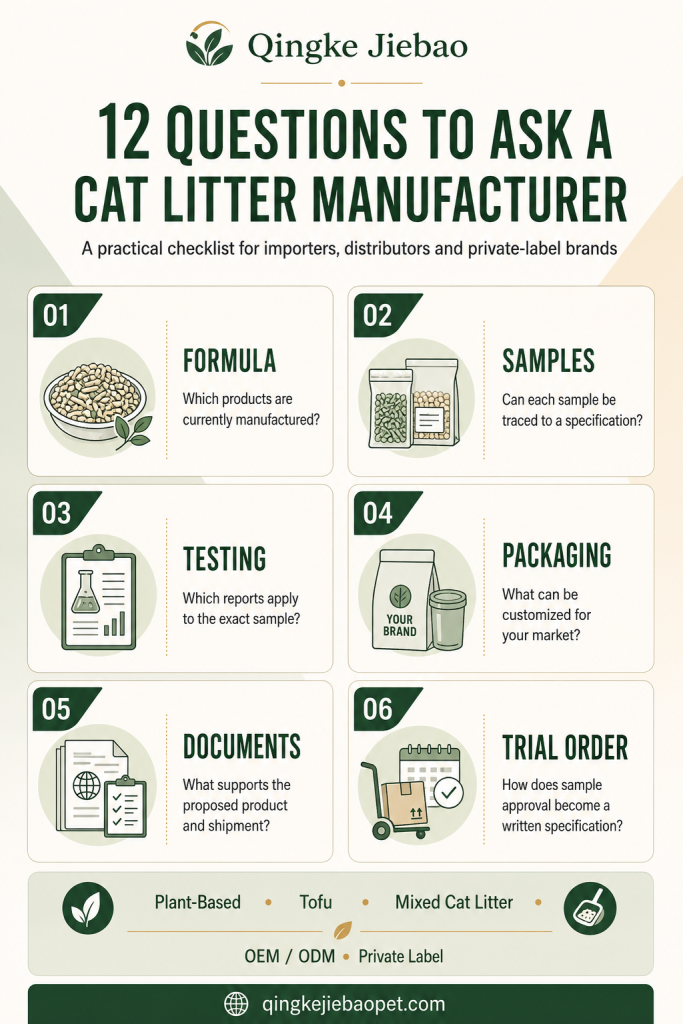
Choosing a private label cat litter manufacturer involves more than comparing a sample and requesting the lowest quotation. Importers, distributors, pet-care brands and e-commerce sellers also need to evaluate formula suitability, packaging options, quality documents, production controls and the process from sample approval to commercial delivery.
This is particularly relevant during major sourcing events. Pet Fair Asia 2026 is scheduled for August 19–23 in Shanghai, with its first three days focused on business visitors and supply-chain activities. The event gives international buyers an opportunity to meet manufacturers, but a short exhibition conversation should be treated as the beginning of supplier qualification—not the final purchasing decision. (Pet Fair Asia official information)
The following 12 questions can help buyers compare a cat litter manufacturer more systematically, whether the first meeting takes place at a trade show, in a factory or online.
Which Cat Litter Formulas Do You Currently Manufacture?
Start by confirming what the factory currently produces rather than relying only on a broad product catalogue.
Depending on your target market, you may be looking for:
- Tofu cat litter
- Plant-fiber cat litter
- Bentonite cat litter
- Cassava cat litter
- Mixed cat litter
- Charcoal or zeolite formulas
- Fine-granule formulas for selected automatic litter boxes
Ask the supplier to distinguish between products in regular production, formulas available for sampling and products that require new development.
A professional cat litter supplier should also ask about your intended sales channel. A formula developed for an independent pet store may require different positioning, packaging and pricing from a product intended for supermarkets, marketplaces or subscription services.
What Can Be Customized Through the OEM Program?
The phrase “full customization” is too vague for a purchasing decision. Ask the manufacturer to list the elements that can actually be changed.
A cat litter OEM project may include customization of:
- Formula
- Granule diameter
- Fragrance
- Color
- Functional ingredients
- Bag weight
- Bag structure
- Vacuum packing
- Printed private-label packaging
- Carton configuration
Qingke Jiebao supports OEM/ODM discussions involving plant-based, tofu and mixed cat litter, including options for formula, fragrance, color, granule size, vacuum packing and private-label packaging. Exact availability should be confirmed against the buyer’s product brief.
Which Formula Fits My Market and Sales Channel?
A supplier should not recommend the same formula to every buyer.
Before requesting a recommendation, provide basic commercial information:
- Target country
- Primary retail channel
- Customer price segment
- Preferred material
- Intended bag size
- Estimated monthly demand
- Private-label requirements
For example, a buyer seeking a lightweight premium product may evaluate tofu or another plant-based formula, while a value-oriented retail program may have different material and landed-cost priorities.
The objective is not to identify one universally “best” cat litter. It is to find a commercially suitable product for a defined market position.
Can You Provide Identified Samples and Specifications?
Each sample should be connected to a formula name, model or specification. Avoid accepting unmarked bags that cannot later be matched to a quotation or test report.
Ask the private label cat litter manufacturer to provide:
- Sample name or model
- Material or formula description
- Granule specification
- Fragrance
- Sample production date or batch reference, when available
- Recommended storage conditions
- Relevant product specification sheet
This makes subsequent cat litter sample evaluation more traceable.
How Should Samples from Different Suppliers Be Compared?
Samples should be tested under the same internal method.
Buyers can develop a simple comparison sheet covering:
- Sample weight
- Liquid quantity
- Absorption time
- Clump formation
- Clump handling
- Visible loose powder
- Tracking observation
- Odor-control evaluation method
- Storage condition
- Packaging condition
The purpose is not to reproduce a laboratory test. It is to prevent one sample from being tested under more favorable conditions than another.
Record the formula and sample identity alongside every result. Photos and short videos can help different members of the buying team review the same observations.
Which Test Reports Apply to the Exact Sample?
Do not assume that one report covers every product made by the factory.
Check the following information:
- Laboratory name
- Report number
- Product or sample name
- Model
- Testing dates
- Test methods
- Reported results
- Accreditation limitations
- Whether the commercial sample matches the tested sample
For example, Qingke Jiebao holds CTI report A2240796224101001C for the tested 1.5A plant original/unscented cat litter sample. In that report, the sample recorded a powder-content result of 0.28% and a water-absorption multiple of 3.31.
These results apply only to the tested sample. They should not be presented as a regulatory approval, a whole-range guarantee or evidence that every production batch will produce identical results.
This sample-specific approach is more credible than unsupported claims such as “zero dust” or “completely safe.”
What Is Checked During Routine Production?
A third-party test report and routine factory quality control are not the same thing.
Ask which properties the manufacturer checks during:
- Raw-material receiving
- Formula preparation
- Granulation
- Drying
- Screening
- Packing
- Finished-product inspection
Depending on the product, buyers may discuss granule dimensions, moisture, package sealing, weight control and other agreed specification points.
The final trial-order specification should clearly state which characteristics are acceptance requirements and how they will be evaluated.
Can You Support Private-Label Packaging?
Packaging must support both transportation and retail presentation.
Ask about:
- Available bag structures
- Vacuum-packing options
- Printing requirements
- Artwork dimensions
- Number of colors
- Carton options
- Pallet configuration
- Barcode placement
- Retail-language requirements
When comparing quotations, confirm whether the price includes a plain bag, sticker label, printed bag, carton or another configuration. Two prices are not comparable if they refer to different packaging.
A buyer seeking custom cat litter packaging should also confirm who reviews the destination-market label. The manufacturer can provide product information, but the importer or brand owner should verify applicable labeling and market-access requirements.
Is the Product Suitable for Automatic Litter Boxes?
Avoid universal compatibility claims.
If the product will be marketed for automatic litter boxes, provide the manufacturer with the target machine model or technical requirements. Relevant factors may include granule size, clump behavior, screening design and the machine manufacturer’s instructions.
Qingke Jiebao offers fine-granule mixed-formula options intended for selected automatic litter-box applications. Compatibility should still be confirmed through model-specific sample testing.
Do not publish “works with every automatic litter box” unless this has been independently established for every named model—which is rarely realistic.
Which Documents Can Be Provided for the Proposed Product?
The required documentation may vary by formula, destination, importer and transport method.
Possible buyer-file documents include:
- Product specification
- Ingredient or composition information
- Safety data documentation, when applicable
- Sample-specific test reports
- Packaging information
- Transport identification documents
- Commercial invoice and packing-list information
Ask which documents apply to the exact commercial product and whether they are current.
An MSDS or laboratory report should not automatically be described as FDA approval, EPA approval, CE certification, REACH compliance or universal import authorization.
What Is Included in the Commercial Quotation?
A useful quotation should identify the assumptions behind the price.
Request clarification of:
- Formula
- Granule specification
- Fragrance
- Bag weight
- Packaging type
- Order quantity
- Incoterm
- Port or destination
- Artwork status
- Quotation validity
- Production schedule
- Sample and packaging approval requirements
MOQ, price, lead time and loading quantity should be confirmed for the specific project. Avoid applying an indicative trade-show quotation to a later order with a different formula or packaging format.
What Happens After Sample Approval?
Before selecting a wholesale cat litter supplier, define the path from sample to trial order.
A practical process may include:
- Buyer submits an RFQ
- Supplier recommends a formula
- Identified samples are prepared
- Buyer completes sample evaluation
- Formula and packaging are confirmed
- A written trial-order specification is approved
- Production and inspection requirements are agreed
- Shipping documents are reviewed
- Arrival condition is evaluated
- Feedback is recorded before a repeat order
The approved specification should include the formula or model, granule size, fragrance, packaging structure, artwork version and agreed inspection criteria.
From Supplier Meeting to Qualified OEM Partner
The best private label cat litter manufacturer is not necessarily the company offering the lowest verbal price or the longest list of marketing claims.
A more reliable supplier-selection process focuses on four questions:
- Can the supplier provide a product that fits your market?
- Can samples and documents be traced to an exact specification?
- Can packaging and private-label requirements be clearly defined?
- Can both parties turn sample approval into a documented trial order?
Qingke Jiebao manufactures plant-based, tofu and mixed cat litter and supports OEM/ODM and private-label discussions. Buyers can contact the team with their country, company, target formula, estimated monthly quantity and packaging requirements.
This information allows us to recommend a more relevant starting formula and prepare a focused sample discussion instead of sending a general price list.
Request an OEM Cat Litter Discussion
Tell Qingke Jiebao about your target market and product plan:
- Country
- Company
- Target formula
- Preferred granule size
- Packaging requirement
- Estimated monthly quantity
- Private label needed: Yes or No
1. Insufficient Pellet Hardness
Soft pellets may be comfortable under a cat’s paws, but they can break during shipping, pouring and digging.
Pellet hardness needs to be balanced with absorption. Extremely hard pellets may absorb more slowly, while very soft pellets may create excessive powder.
2. Moisture Exposure
Tofu and other plant-derived materials can be sensitive to humidity. Inadequate sealing or poor warehouse conditions may weaken pellets before the consumer opens the bag.
Importers should ask about the packaging’s moisture barrier, sealing method and recommended storage conditions.
3. Transportation Damage
A small sample shipped by courier may perform differently from retail bags stacked inside a container.
Vibration, compression and repeated handling can increase powder content. Commercial packaging should therefore be tested under realistic shipping conditions.
4. Formula and Particle Dimensions
Tofu, cassava, corn and blended litters behave differently after absorbing liquid. Pellet diameter, starch content and processing conditions can influence clumping and breakdown.
The ingredient name alone does not prove product performance.
Plant-based cat litter is increasingly popular among cat owners looking for lightweight and low-dust alternatives to traditional clay litter.
However, a common complaint is that pellets or granules gradually break down into powder after repeated use.
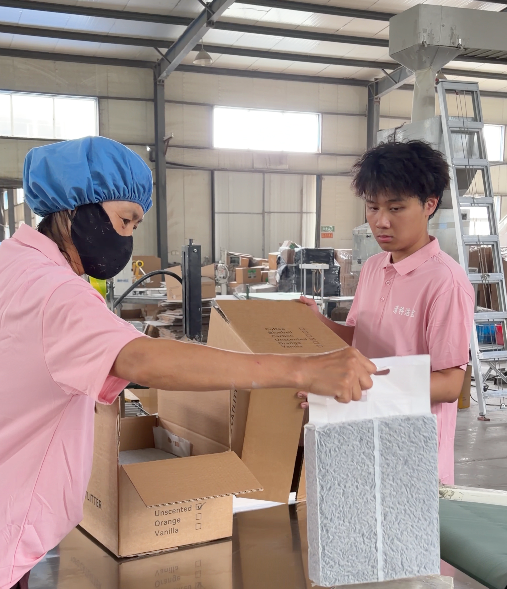
A recent cat-owner discussion raised this exact problem, describing natural litter that disintegrated over time or became soft after absorbing a large amount of liquid.
This is only an individual consumer report, but it highlights an important product-development issue for manufacturers and private-label brands: dry dust and wet breakdown are not the same problem.