Qingke Jiebao Pet Products
1. Insufficient Pellet Hardness
Soft pellets may be comfortable under a cat’s paws, but they can break during shipping, pouring and digging.
Pellet hardness needs to be balanced with absorption. Extremely hard pellets may absorb more slowly, while very soft pellets may create excessive powder.
2. Moisture Exposure
Tofu and other plant-derived materials can be sensitive to humidity. Inadequate sealing or poor warehouse conditions may weaken pellets before the consumer opens the bag.
Importers should ask about the packaging’s moisture barrier, sealing method and recommended storage conditions.
3. Transportation Damage
A small sample shipped by courier may perform differently from retail bags stacked inside a container.
Vibration, compression and repeated handling can increase powder content. Commercial packaging should therefore be tested under realistic shipping conditions.
4. Formula and Particle Dimensions
Tofu, cassava, corn and blended litters behave differently after absorbing liquid. Pellet diameter, starch content and processing conditions can influence clumping and breakdown.
The ingredient name alone does not prove product performance.
Plant-based cat litter is increasingly popular among cat owners looking for lightweight and low-dust alternatives to traditional clay litter.
However, a common complaint is that pellets or granules gradually break down into powder after repeated use.
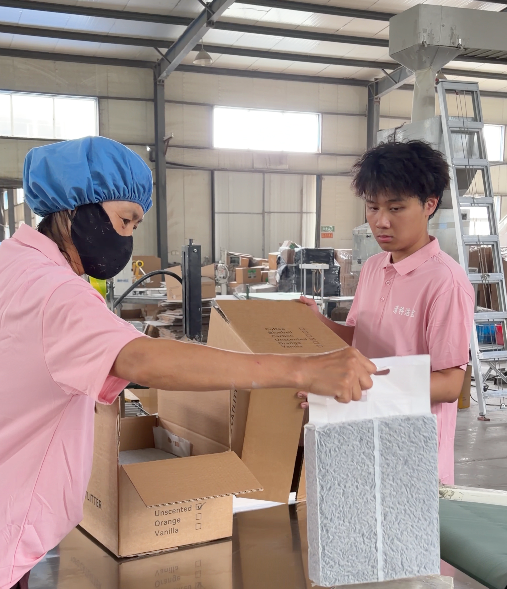
A recent cat-owner discussion raised this exact problem, describing natural litter that disintegrated over time or became soft after absorbing a large amount of liquid.
This is only an individual consumer report, but it highlights an important product-development issue for manufacturers and private-label brands: dry dust and wet breakdown are not the same problem.
The story of Qingke Jiebao began with a little cat.
Born from nature and carrying the gentle spirit of plants, the cat unexpectedly entered someone’s life—and discovered what it meant to have a home.
At first, it was a quiet stranger resting in the corner. Gradually, it became a constant companion, sharing its owner’s everyday life with soft breaths and affectionate cuddles. Its warmth transformed ordinary days into something meaningful and gave its owner someone precious to care for.
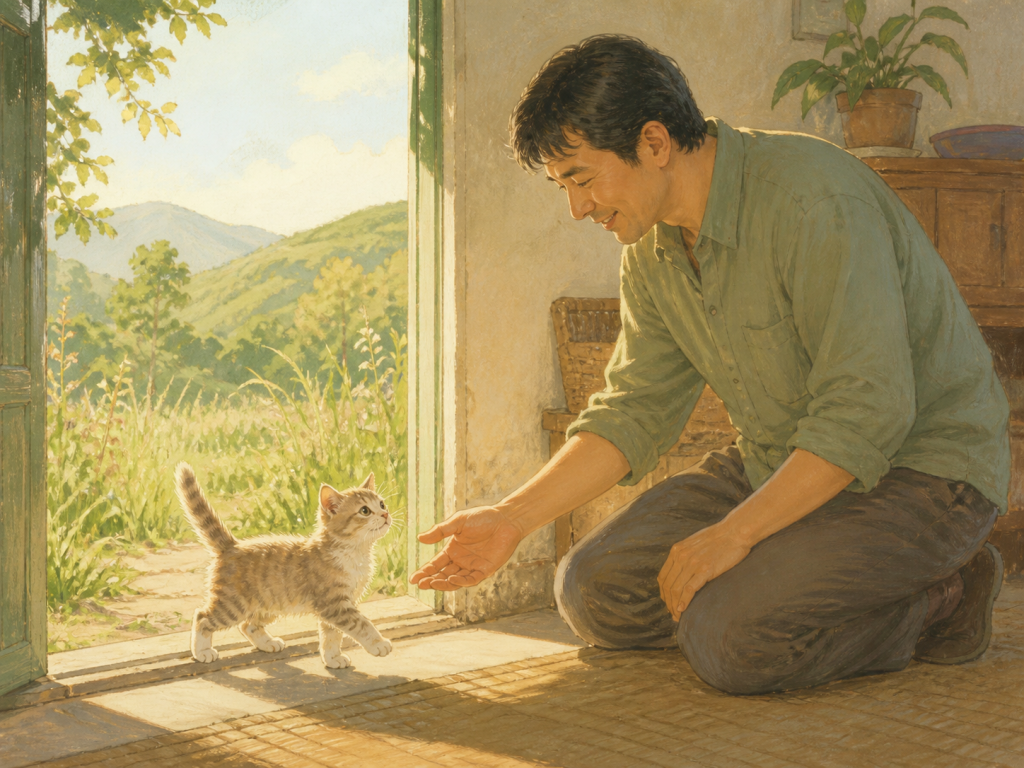
This silent companionship inspired a question: What kind of life should we create for the animals who bring us so much comfort?
The cat’s owner had spent twenty years working in the grain-processing industry. He understood every grain and knew the cycle behind food production. After crops were harvested and processed, materials such as plant stalks and soybean residue were often discarded, even though they still had potential value.
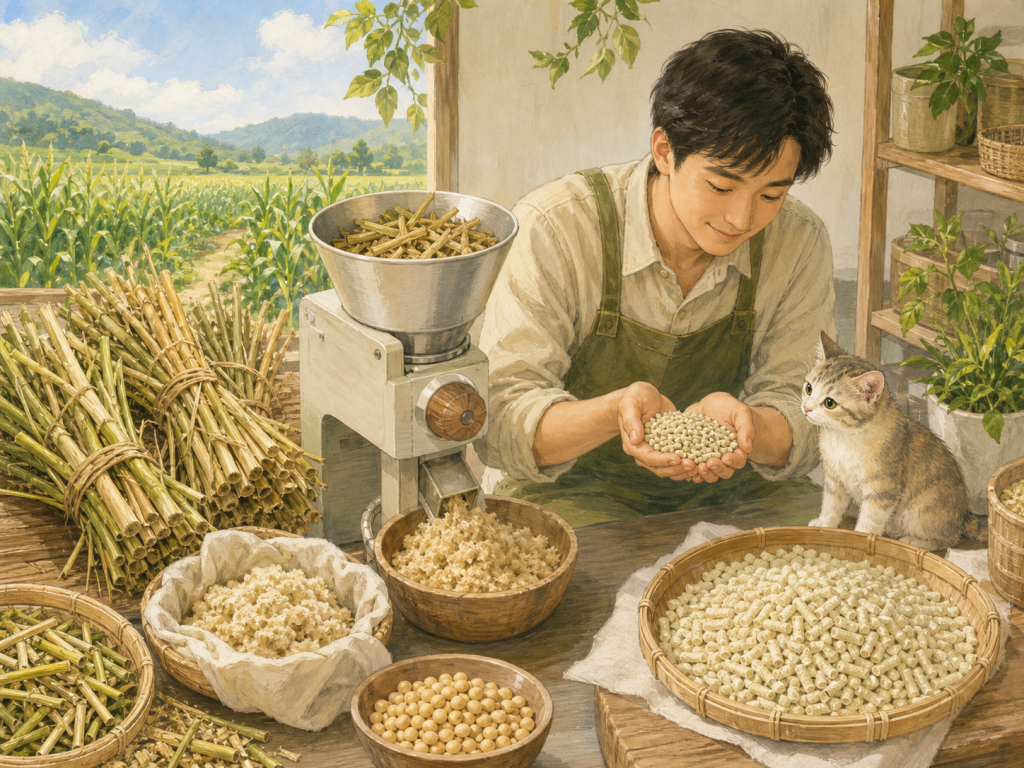
To him, they were not useless waste. They were gifts from nature whose purpose had yet to be fulfilled.
Motivated by his love for the cat and a deep sense of environmental responsibility, he began exploring ways to select, process, and repurpose these plant-based materials—bringing them back into everyday life in a new form.
From sourcing suitable natural ingredients to continuously improving absorbency, clumping performance, and the overall user experience, Qingke Jiebao gradually took shape through years of experimentation and refinement.
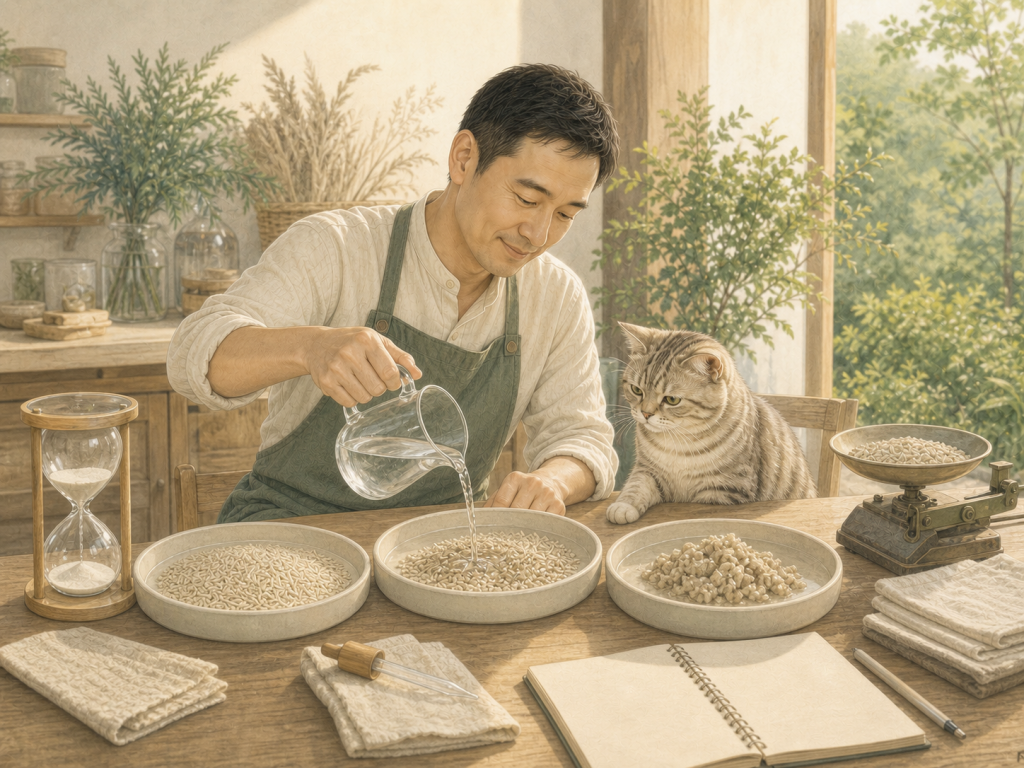
It was created to be more than just a plant-based cat litter brand.
Qingke Jiebao brings materials from nature into the home, offering comfort for cats, convenience and reassurance for their owners, and renewed value for plant resources that might otherwise be discarded.
A little cat from nature found a loving home. In return, the person whose life it had warmed drew upon twenty years of industry experience to create a cleaner, more natural way of living for it.
This is where the story of Qingke Jiebao began—
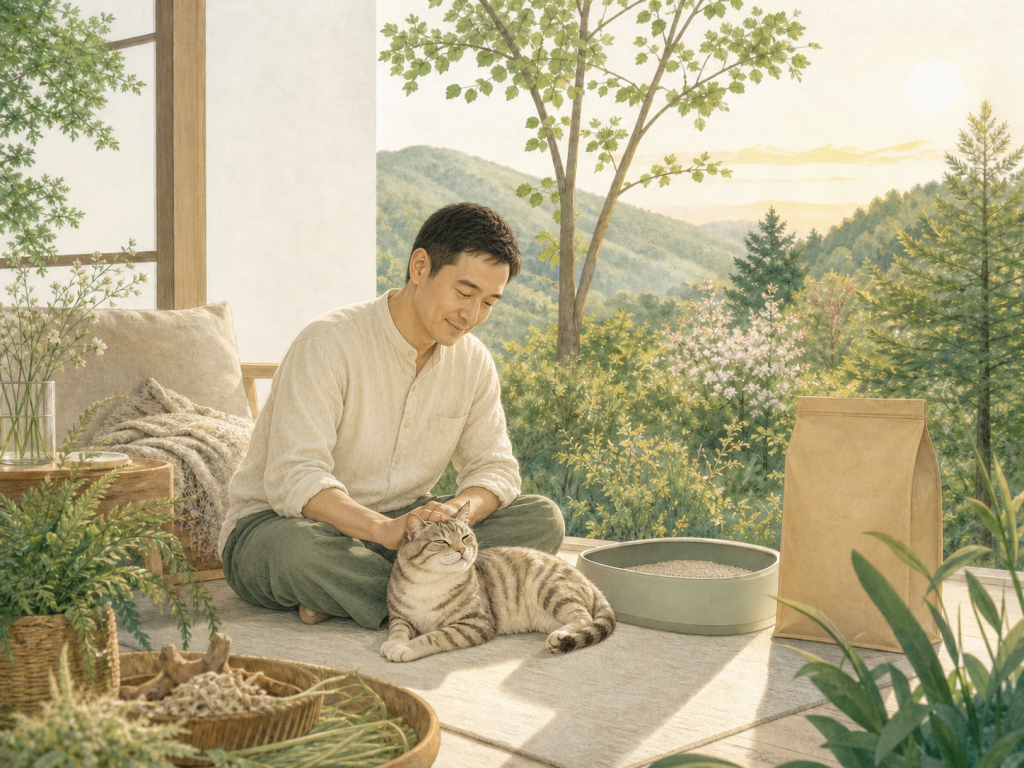
Born from companionship. Made with nature.
Created to bring cleanliness and warmth to every home shared with a cat.